

Fayetteville Junk Removal Services
Schedule now and watch your property transform with same-day pickup and stress-free hauling!
Get a Free QuoteExpert Junk Removal Solutions for Fayetteville's, GA Diverse Property Needs
Tailored Junk Removal for Every Fayetteville Home and Business
Fayetteville, GA’s unique blend of historic neighborhoods and vibrant new developments means junk removal needs shift with the seasons. In winter, residents often require post-storm cleanup and disposal of salt-damaged outdoor items or outdated snow equipment. Spring brings renovation debris, especially in well-known communities like The Villages at Lafayette Park, Rivers Edge, and Lakemont. Summer sees yard waste pile up near local favorites such as McCurry Park and Lake Horton, while fall demands leaf and branch removal in tree-lined areas like Timberlake and Whitewater Creek. Year-round, we assist with basement flooding cleanup near Whitewater Creek, help growing families clear out outgrown items, and support estate cleanouts throughout the city.
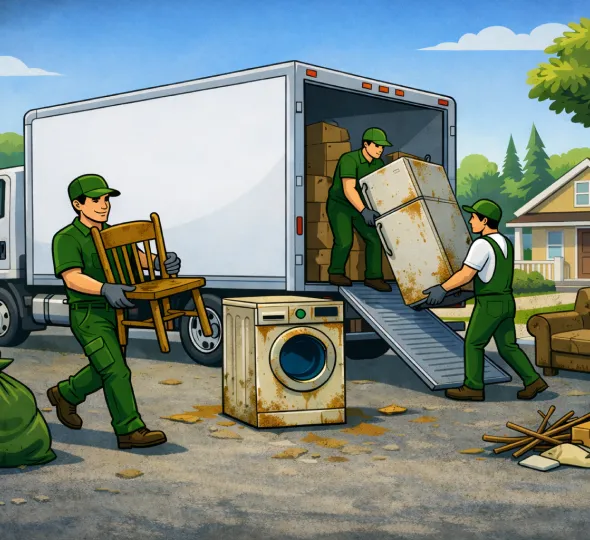
Our Fayetteville Residential & Commercial Junk Removal Services
Fayetteville Residential Junk Removal Services
Fayetteville Commercial Junk Removal Services
Fayetteville Specialty & Other Junk Removal Services
Why Choose Fayetteville Junk Removal Services
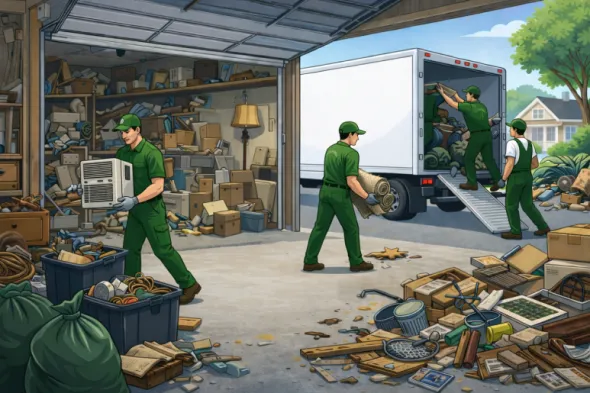

Comprehensive Junk Removal Expertise
-
Competitive Pricing
-
Professional and Courteous Team
-
Satisfaction Guarantee
-
Personalized Service
-
Eco-Friendly Disposal
-
Fast and Reliable Scheduling
Coordinating with Fayetteville's Department of Public Works for Bulk Waste & Special Items
Fayetteville's Public Works Department oversees municipal infrastructure services including sanitation, street maintenance, and stormwater management within the city limits. Residents in unincorporated Fayette County coordinate solid waste services through the county, while those inside city boundaries work directly with the City of Fayetteville. Bulk waste collection and special item disposal require advance scheduling through the Public Works office. The Georgia Environmental Protection Division regulates all solid waste facilities operating in the region, including transfer stations and landfills serving Fayetteville.
- Contact Public Works to schedule bulk item pickups for furniture, appliances, and large household items
- Verify accepted materials before placing items curbside
- Hazardous waste, tires, and batteries are prohibited from regular collection
- Fayette County Transfer Station on McDonough Road accepts residential waste for disposal
Fayetteville Public Works Department
240 Glynn Street South, Fayetteville, GA 30214
Phone: (770) 461-6029
Official Website: Fayetteville Public Works Department
Fayetteville Municipal Regulations & Permits for Junk Removal Services
All waste haulers operating within Fayetteville must comply with municipal code requirements enforced by the City's Code Enforcement Division. Dumpster placement on public rights-of-way or city streets requires a permit through the Engineering Department. Typical right-of-way permit processing in Fayette County ranges from 3–5 business days, and applicants must provide proof of liability insurance. The Fayetteville Building Inspections office handles permits for renovation and demolition projects that generate construction debris. Properties within Fayetteville's historic downtown overlay district require additional review by the Planning & Zoning Commission before exterior demolition or debris removal.
- Business license registration is required for all commercial waste haulers operating in Fayetteville
- Right-of-way permits must be obtained before placing dumpsters or roll-off containers on city streets
- Proof of general liability insurance and vehicle registration is mandatory
- HOA-governed subdivisions may impose additional restrictions on dumpster placement and removal schedules
Fayetteville Code Enforcement
240 Glynn Street South, Fayetteville, GA 30214
Phone: (770) 461-6029
Official Website: Fayetteville Code Enforcement
Partnering with Fayetteville's Environmental & Recycling Initiatives
Fayette County and the City of Fayetteville participate in Georgia's statewide goal to reduce solid waste disposal by 25% through source reduction, recycling, and composting. The Georgia Environmental Protection Division oversees compliance with the Georgia Comprehensive Solid Waste Management Act. Fayetteville residents can access curbside recycling through their contracted hauler, and the Fayette County government periodically hosts recycling drop-off events for electronics, paper, and scrap metal. Donation partnerships with Habitat for Humanity ReStore in Peachtree City and local Goodwill locations divert reusable furniture and appliances from landfills.
- Curbside recycling accepts paper, cardboard, plastics #1–#7, glass, and aluminum
- Scrap metal recycling facilities in south metro Atlanta accept appliances, steel, and copper
- Habitat for Humanity ReStore in Peachtree City accepts donated furniture, cabinets, and building materials
- Fayette County periodically schedules electronics recycling collection events at designated drop-off sites
- Yard waste and brush can be taken to the Fayette County composting facility
Hazardous Waste Restrictions & Proper Disposal Channels in Fayetteville
Georgia law prohibits the disposal of hazardous materials—including paint, solvents, pesticides, motor oil, and lead-acid batteries—in municipal solid waste streams. The EPA's Resource Conservation and Recovery Act (RCRA) establishes the federal framework governing hazardous waste identification, storage, and disposal. Fayette County coordinates periodic Household Hazardous Waste (HHW) collection events, typically held at the Fayette County Administrative Complex on Stonewall Avenue in Fayetteville. Residents must pre-register and transport materials in original labeled containers. Businesses generating hazardous waste must comply with generator requirements under Georgia Rules for Hazardous Waste Management, Chapter 391-3-11.
- Latex and oil-based paints, stains, and varnishes require HHW collection or approved drop-off
- Automotive fluids, antifreeze, and lead-acid batteries are accepted at participating auto parts retailers
- Fluorescent bulbs and mercury-containing devices fall under the EPA Universal Waste Rule
- Propane tanks, fire extinguishers, and aerosol cans require specialized handling
- Fayette County HHW events are announced on the county government website and local media
EPA Region 4 – Southeast
61 Forsyth Street SW, Atlanta, GA 30303
Phone: (404) 562-9900
Official Website: EPA Region 4 – Southeast
Appliance Removal & Refrigerant Recovery Requirements in Fayetteville
Federal Clean Air Act Section 608 regulations mandate that EPA-certified technicians recover refrigerants from all cooling appliances—including refrigerators, freezers, air conditioners, and dehumidifiers—before disposal or recycling. Fayetteville residents and haulers must ensure refrigerant recovery documentation accompanies any appliance delivered to a transfer station or scrap facility. Georgia does not currently operate a statewide electronics EPR program, but the Georgia Environmental Protection Division encourages responsible e-waste recycling through county-level collection events and manufacturer take-back programs. Pre-1978 homes in Fayetteville may contain lead-based paint; renovation debris from these properties must comply with the EPA Lead Renovation, Repair & Painting (RRP) Rule.
- Refrigerant recovery certification (EPA Section 608 Type I, II, or Universal) is required before appliance disposal
- White goods (washers, dryers, stoves, dishwashers) are accepted at scrap metal facilities after proper preparation
- Computers, monitors, televisions, and printers should be recycled through certified e-waste processors
- Fayette County e-waste collection events accept covered electronics at no charge to residents
- Renovation debris from pre-1978 structures requires lead paint testing and certified handling
Seasonal Waste Patterns & Weather Considerations in Fayetteville
Fayetteville's humid subtropical climate produces hot summers with temperatures regularly exceeding 90°F and mild winters with occasional ice storms. These conditions directly affect junk removal scheduling and material handling. Summer heat accelerates odor and pest issues in stored waste, making prompt removal of organic materials and old appliances essential. Late-summer and early-fall severe thunderstorms generate storm debris including downed trees and damaged fencing. The Georgia Tree Council provides guidance on tree removal and debris management following storm events. Spring and fall represent peak demand periods for residential cleanouts and yard waste removal across Fayette County.
- Summer heat requires same-day or next-day removal of perishable items and organic waste
- Ice storms in January and February can delay collection schedules and restrict road access
- Post-storm tree debris removal may require coordination with Fayetteville Public Works for right-of-way clearance
- Spring cleaning season (March–May) generates high volumes of furniture, clothing, and household goods
- Fall leaf season produces significant yard waste requiring composting or mulching
What Neighborhoods Do We Serve Throughout Fayetteville, GA?
Downtown Fayetteville Courthouse Square and surrounding blocks along Glynn Street and Lanier Avenue. High-density commercial and residential core with limited street parking; coordination with city permits is often required for curbside removal near the historic courthouse district.
Whitewater Creek Subdivision off Highway 85 South. Established suburban neighborhood with wide driveways and mature landscaping; ideal for large appliance removal and garage cleanout projects.
The Gates at Limestone Creek Gated community off Limestone Parkway. Newer construction with HOA oversight requiring advance approval for dumpster placement and scheduled removal windows.
Devereaux Neighborhood along Devereaux Road near Fayette County High School. Mid-century ranch homes with detached garages and basements; common requests for estate cleanouts and attic clearing.
Lafayette Gardens Community off Lafayette Avenue near downtown. Older homes built in the 1970s–1980s with potential lead paint and asbestos concerns in renovation debris; certified handling may be required.
Summerland Subdivision off South Jeff Davis Drive. Family-oriented neighborhood with cul-de-sacs and moderate lot sizes; seasonal demand peaks during spring and back-to-school periods.
Construction & Renovation Debris Coordination in Fayetteville
Renovation and construction projects in Fayetteville require building permits issued through the Building Inspections Department before work begins. Construction debris—including drywall, lumber, roofing materials, concrete, and brick—must be separated and disposed of at facilities licensed to accept construction and demolition (C&D) waste. The Fayette County Transfer Station accepts sorted C&D materials, and several private C&D landfills operate in the south metro Atlanta region. Georgia's Solid Waste Management Act requires generators of construction waste to use permitted haulers and maintain disposal records. Projects involving structures built before 1978 must address potential lead-based paint under federal RRP Rule requirements.
- Building permits are required before generating demolition or renovation debris in Fayetteville
- C&D waste must be separated: clean wood, concrete/masonry, metals, and mixed debris
- Asbestos-containing materials require licensed abatement contractors and separate disposal at approved facilities
- Roofing shingles may be accepted at asphalt recycling facilities in the greater Atlanta area
- Contact Fayetteville Building Inspections at (770) 461-6029 for permit requirements
Fayetteville Building Inspections
240 Glynn Street South, Fayetteville, GA 30214
Phone: (770) 461-6029
Official Website: Fayetteville Building Inspections
Fayetteville's Role in Fayette County Solid Waste Management Planning
Fayetteville serves as the county seat of Fayette County and plays a central role in regional solid waste planning. Georgia requires each county to maintain a comprehensive solid waste management plan updated every 10 years under the Georgia Comprehensive Solid Waste Management Act (O.C.G.A. § 12-8-31.1). Fayette County's plan establishes waste reduction targets, identifies disposal capacity, and coordinates services among Fayetteville, Peachtree City, Tyrone, and Brooks. The nearest subtitle D municipal solid waste landfill serving the region operates in south metro Atlanta, and regional haulers transport waste from the Fayette County Transfer Station. The Georgia Environmental Protection Division maintains a directory of permitted solid waste facilities statewide.
- Fayette County's solid waste plan targets 25% waste reduction through recycling and source reduction
- The Fayette County Transfer Station serves as the primary drop-off point for residential and small commercial loads
- Regional landfill capacity planning involves coordination among multiple south metro Atlanta counties
- Private haulers contracted by the City of Fayetteville provide weekly curbside collection for residential customers
- Georgia requires annual reporting of solid waste tonnage by all permitted facilities
Fayetteville Planning & Zoning Commission
240 Glynn Street South, Fayetteville, GA 30214
Phone: (770) 461-6029
Official Website: Fayetteville Planning & Zoning Commission